
We’re Vidpros. We offer Podcast Video Editing Services. What follows is a transparent comparative guide instead of a sales piece because we’ve found that the #1 question potential clients ask us is “how do I distinguish between a video-first editor and an audio-first editor with a video bolt-on?” unfortunately, we haven’t been able to find a fair comparative page anywhere online that addresses this.
Here’s what you should understand about Podcast Video Editing Services – specifically regarding pricing, deliverables, Multi-cam capability, shorts add-ons, and the 10 key questions that differentiate a true video editing partner from a freelancer pretending to be one. At the end of the section is Vidpros’ rate card along with some competitive alternatives.
Standard deliverables list for mid-tier video editing service (2026)
According to rise25’s breakdown of how much Podcast Video Editing Services cost, here are the typical deliverable lists for a mid-tier video editing service in 2026:
-
full post production: video editing, audio editing, mixing, mastering.
-
Multi-cam edit with deliberate cuts on speech beats, with b-roll cadence.
-
color correction & lighting match across cameras.
-
lower thirds, intro/outro sequences, transitions consistent with brand kit.
-
captions burned in or side car SRT files.
-
show notes with timestamps, episode artwork.
-
2 – 4 social media assets per episode (vertical clips, audiograms, quote cards).
-
Background noise reduction on all speaker tracks.
-
publishing hand off (file delivery in MP4, MOV, direct upload to your hosting and YouTube).
-
typical premium add-ons priced separately: extra vertical clips @ $30 – $80 each, full transcripts @ $1 – $3 per minute podcast, blog post versions @ $300 – $1,000 per episode, long form highlight reels.
See our pillar page on video podcast production to learn more about the larger scope of video podcast production surrounding the editing line. See our comparison of audio editing services for the audio side of things.
Audio first editor + video bolt-on vs. Native video podcast editor
This is the distinction that most buyers fail to recognize when buying podcast editing services.
Audio first editors with a video bolt-on. These are vendors and freelancers who developed their workflow based on audio editing and added video capabilities later. The tell-tale signs: their portfolio features audio waveforms; they break out video as a “video add-on” line item in their pricing structure; and their video editors tend to be less experienced than their audio engineers.
The output is adequate for shows where video is secondary (an audio podcast that posts a video version on YouTube as a b-side); however, the decision-making behind Multi-cams tends to be mechanistic rather than thoughtful.
Native video podcast editors. These are vendors and editors who developed their workflow centered on video. Multi-camera Sync is automated as opposed to being done manually. B-roll creation is also integrated into their workflows as opposed to being something that they charge additional money for. They style captions to fit the brand by default. Their portfolios lead with video frames rather than waveforms.
Vidpros and several other specialized firms such as Podcast Magician fall within this category. Other companies that have video services as part of their offering include Castos, bare value, and a few others.
To quickly determine whether or not you are dealing with an audio-first editor with a video bolt-on versus a native video podcast editor ask the editor for three samples of Multi-camera edits they completed previously. A native video podcaster will provide these to you in 24 hours. An audio-first editor may struggle to produce even one.
Best options for Podcast Video Editing Services
A fair assessment of the top options currently available. Pricing for these options may vary frequently.
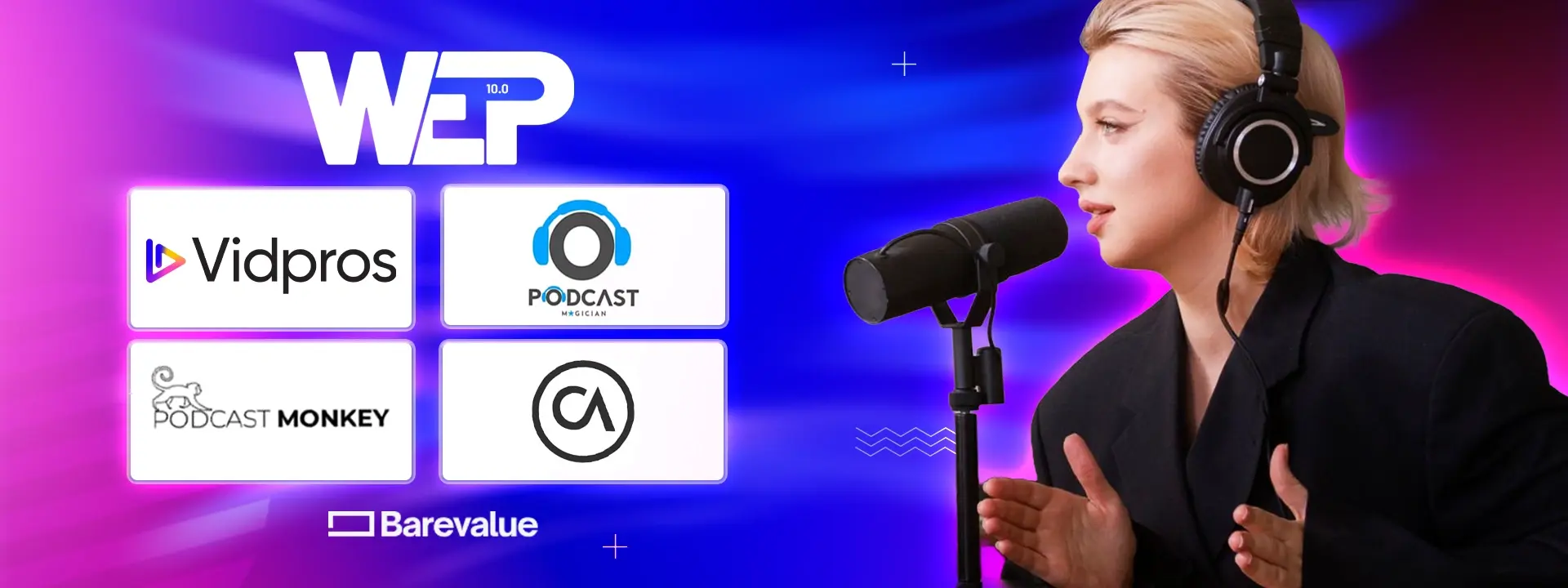
Vidpros. Subscription model at $1,500-$3,500 / month dependent upon cadence. Includes 4-8 long form episodes plus 8-24 vertical short videos per month. Includes Multi-camera editing. Includes color correction and matching light across cameras. Includes captioning and styling according to your brand guidelines. Includes lower thirds and outro sequences consistent with your brand guidelines. Includes b-roll generated as needed. Includes professional-grade audio mixing to broadcast loudness levels. Includes show notes and episode artwork. 48-72 hour turn-around time. Designed for use by video-first podcasts.
We edit podcasts. Offer Two plans: one plan offers video editing ($800/month) and another plan combines audio editing ($900/month) with video editing ($1,800/month) for coverage of four episodes/month up to sixty minutes each, per their website pricing page.
Podcast Magician. Charges by episode; costs range from $400-$1200 per episode. Offers Multi-camera capability; includes captioning; includes social media content (short videos, etc.) includes full transcript of podcast episode if desired by customer. Native video podcaster.
Bare value. Costs $1.79 per minute of audio edited (approximately $54 for a thirty-minute episode), per Barevalue’s pricing. Turnaround time is four business days. Will quote video rates separately. Uses an audio-first approach and adds video bolt-on capabilities.
ContentAllies. $4,000-$10,000/month full service podcast retainer that includes video editing as part of overall package offering. Ideal for b2b podcasts seeking both strategic direction and production services.
PodcastMonkey. $100 per episode for full editing services including delivery of MP3 file; quotes video separately if desired. Audio first.
Fiverr and upwork freelancers. Prices per episode range from $50-$500 depending on individual freelancer experience and quality offered. May be worth considering if you have time to interview and select five to ten candidate freelancers.
Riverside, Descript, opusclip. They are not editing services; they are AI-based editing platforms used by customers themselves. See our DIY software alternative comparison page for details.
For more information on the full production company option for podcast editing services instead of just an editing service option, visit our roundup page.
Pricing models for Podcast Video Editing Services
There are three primary pricing models utilized in Podcast Video Editing Services with vastly differing incentive structures.
Per-episode pricing model. Pricing ranges from $50-$5,000 per episode (Trevor O’Hare’s 2025 cost guide). Appropriate when your release schedule is inconsistent, or you are evaluating a vendor for the first time. Rewards the vendor with alignment with actual usage patterns; it becomes expensive after episode eight to ten.
Monthly subscription model. Pricing ranges from $800-$3,500 per month based on a fixed amount of throughput (i.e., four long-form episodes and eight to twelve shorts). Suitable when your release schedule is predictable. Least expensive per-episode pricing at scale; Vidpros and we edit podcasts utilize this pricing model.
Monthly retainer model. Pricing ranges from $4,000-$10,000+ per month; includes not only editing services but also producer time as well as strategy development and other services outside of editing. Suitable when you desire a single vendor managing your entire production line; most expensive per-episode pricing model but least expensive for the host in terms of management effort required. (per Trevor O’Hare)
most weekly video podcast shows will benefit from utilizing a Monthly subscription pricing model due to the following: four episodes per month at $400 per episode = $1600 total cost; the same four episodes using a $1500/month subscription model that provides the same number of shorts included in addition to the social asset line normally charged as an additional expense per-episode pricing would cost less while providing additional value-added services.
Specific details regarding Multi-camera editing
Multi-cam editing is where competent editors distinguish themselves from great ones
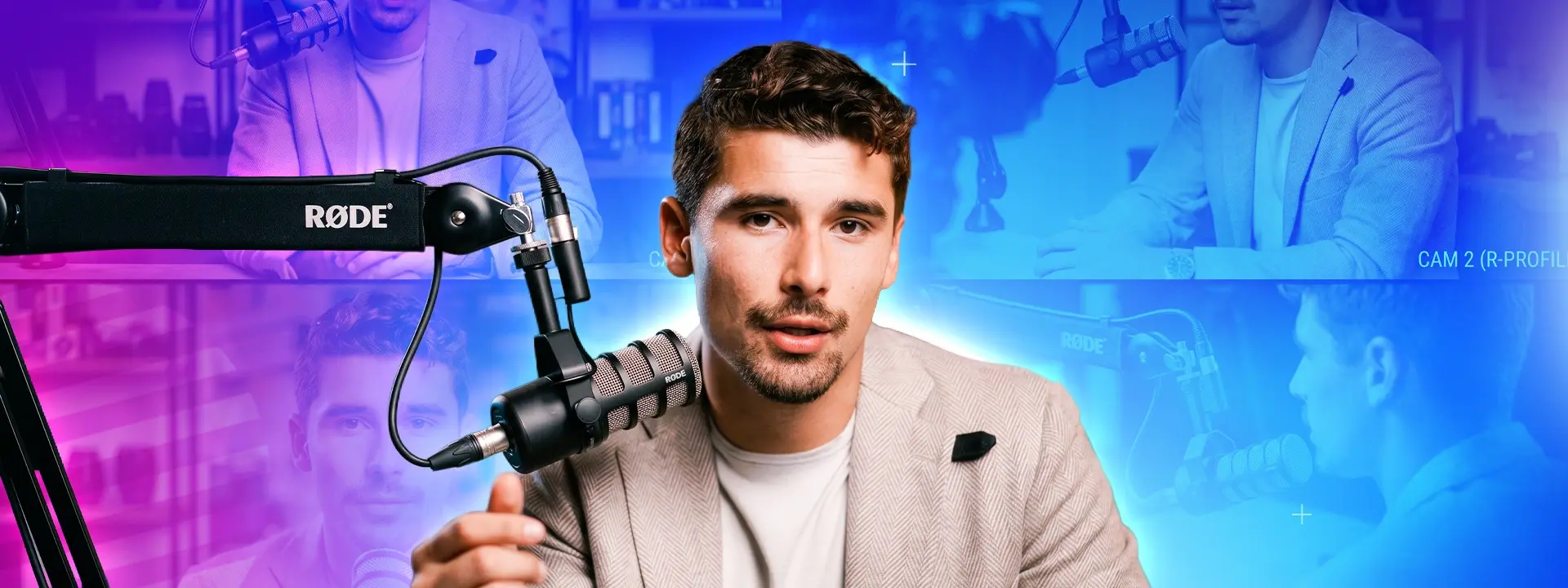
Sync: according to podcast monkey’s video editing notes, approximately forty percent of all editorial problems stem from poor Sync practices. Best practice: use time code generators or camera Sync built-in when possible; waveform-based auto-Sync as backup method; manual Sync using clapper board when no time code is available.
Cadence switches: junior editors cut every 5-7 seconds because someone told them “cut-up-the-shot”. Senior editors cut on the speech beat. Typically keep active speaker visible on-screen most of the time, cutting to reaction shots from listeners when their facial expressions convey emotion not expressed verbally.
B-roll cadences: b-roll exists only to support a point being made by a guest, not to display stock footage – roll b-roll for 4-8 seconds when a guest mentions a specific company/product concept; cut back to the host/guest when reference ends. AI tools (such as Kapwing’s AI B-Roll Generator, Descript’s custom b-roll, Riverside Magic episodes) can generate stock that fits but placement requires human eye.
Color correction between cameras: rarely do two cameras match out of the box – white balance, exposure, and tint need to be corrected per camera – editors who skip this leave you with a host who has a warm orange skin tone and a guest who has a cool blue skin tone.
Quick test of vendor’s Multi-cam capability: ask for sample 3-minute section of 2-camera conversation – if cuts are arbitrary and color doesn’t match – pass
Podcast video editing services (Shorts & clip add-ons):
Almost all video podcast editing services come with some sort of Shorts in their standard packages. Typically, this includes 2 – 4 Shorts for every long-form episode. Premium Shorts options range from $200 – $800 per episode to include 8 – 12 solidly edited clips with branding applied to them and formatted for the correct dimensions for each platform.
What makes a good short deliverable (editorial selections) better than a bad one:
Editorial selection: a human selects the cuts based upon the content and not based solely upon transcript heat mapping. There are many AI tools used to assist in selecting moments, such as OpusClip and Flowjin. Both tools use transcript signals to determine how hot or cold a moment may be. Flowjin states that 70 percent of the clips extracted via their tool do not require additional editing once they are exported, meaning 30 percent do. Good video podcast editing services perform the editorial select process manually.
Reframed vertically: all Shorts are reframed vertically to match the native vertical orientation of mobile devices. This includes using picture-in-picture formats for Two-host shows and crops of single hosts with borders that include the brand identity.
Captions in brand styling: captions are always on and reviewed for accuracy prior to publication. Caption size is optimized for readability on a 5-inch mobile device.
Hook within the First 1.5 seconds: a hook in the First 1.5 seconds of a video clip is often counterintuitive. Examples include: a line, opening a story, making a confession or including a specific number.
For a deeper dive into the workflows surrounding creating Shorts, please visit the Shorts add-on walkthrough. For information regarding producing a highlight reel for a companion piece, visit the highlight reel add-on production section.
Brands and industries served
Different types of podcasts and show formats have varying levels of editing requirements.
B2b podcast (tier HubSpot/Drift/Salesforce, etc.) – 2-camera or 3-camera setup – guest interview style show – 45 – 75 minutes long – focus on guest’s face – use company references, b-roll – branded lower thirds.
Indie creator video podcast – single host or Two-host conversation – recorded remotely using Riverside or Zencastr – focus on pacing – captions – Shorts for social.
Narrative / documentary podcast – produced by – scripted – multiple sessions stitched together – story structure – music sync – sound design.
Corporate media / network show – 3 + cameras – 1 – 3 episodes weekly – consistent brand kit across shows – custom contract.
Internal corporate podcast – in-office recording – lower polish bar – faster turnaround.
Vidpros core fit: indie creators, b2b podcasts ($1500 – $3500/month) and enterprise media teams that produce between four to twelve episodes per month.
Determining your best options when choosing a podcast editing partner
Use this ten-question scorecard to evaluate each potential editing partner you are considering. Evaluate them by running this through every vendor you are evaluating.
-
Show me three examples of multi-camera videos from your most recent sixty days of work.
-
What is your normal amount of time between receiving raw uploads and submitting the First cut?
-
How many revisions does the base price allow for?
-
What software do you edit in? (adobe premiere, blackmagic design davinci resolve, apple final cut pro, descript)
-
Is your editor assigned to your show permanently, or do you get rotated through different editors throughout your engagement?
-
How do you handle reducing ambient background noise from recording tracks for guests who were recorded in untreated spaces?
-
What percentage of captions is accurate when initially submitted and must undergo manual review?
-
Are Shorts included as part of your standard package, or will they incur additional charges?
-
What is your cancellation policy if you decide to terminate service after thirty days?
-
Have you worked on a show in your desired space prior to meeting us, and would you be able to share examples of that work?
Red flags: do you not have an identified editor? (quality will decline when you receive a new editor each week.), Does your pricing model not include any revisions? (Every adjustment will be billed separately.), can’t find any past work in your niche. (Your editor will be learning as he/she edits your show.) Is there proprietary software where I am unable to export any elements? (vendor lock-in).
For an additional evaluation resource comparing freelance vs agency hiring for your podcast editing needs, click here: freelance vs. Agency hiring for podcast editing needs.
Advantages of working with a podcast video editing service
There are several areas where working with a video podcast editing service provides value beyond what can be achieved by working independently or utilizing an AI editor.
Consistency throughout each episode: whether you’re launching episode #1 or episode #50, your show should have a consistent look and feel. The same Intro/outro, the same color palette, the same captioning formatting, the same loudness target. As AI editors evolve and their prompts shift over time, so too will their output. Human editors with established brand kits remain consistent throughout.
Judgement regarding cuts: experienced editors know when to leave pauses long enough for emotional resonance, yet also understand when to shorten those pauses to enhance pacing. AI editors tend to “smooth” all elements of a scene down to the same rhythmic level while losing the unique aspects that make the episode memorable.
Regained time: producing a weekly video podcast with multi-camera support, Shorts, captions, and show notes requires approximately 8-15 hours of dedicated editing time. By outsourcing this task, hosts regain an equivalent amount of time (8-15 hours) each week, which typically equates to determining whether your podcast will sustain itself or if you’ll burn out within the First four months.
One thing a video podcast editing service cannot provide for you is growing your audience. The quality of your video podcast directly impacts viewer retention, and the likelihood that viewers will discuss your podcast with others. This is independent of the effort required to grow your audience as the host.
Onboarding process & First-episode workflow
The general workflow associated with First-time clients and their initial episode(s) when partnering with a video podcast editing service in 2026 includes:
Day 1: initial Discovery call (typically lasts 30-45 minutes). Review Format, frequency, brand kit & file Format specifications.
Days 2-3: brand kit creation. Develop an animated Intro sequence, develop a template for lower thirds, create a caption Format, and establish a color lut.
Days 4-5: upload original episode from the first record session. Multi-camera original video and separate audio/video tracks for each speaker, along with brand assets.
Days 6-9: deliver First cut. Client reviews & provides timestamped feedback.
Days 10-12: editorial revisions. Editor incorporates client-provided feedback and delivers the final version.
Days 13-14: final delivery. Deliver MP4 files along with SRT files for captions, Shorts, and show notes.
By episode three, the overall workflow becomes shorter. Most subscription editors achieve 48-hour turnarounds by month two. Episode one takes longer since it includes building a brand kit simultaneously.
Regarding file delivery: make sure you request raw exports plus project files from your editor. If the editor stops responding and/or drops off mid-project, you can then assign it to another editor without having to rebuild your entire brand kit.
Frequently asked questions
How much do podcast video editing services cost per minute of a podcast or per episode in 2026?
Per-minute cost ranges from $1.79 to $8 to include both video and audio editing. Per-episode cost ranges from $50 to $5,000 depending on tiers (see trevor o’hare’s 2025 pricing guide). For video podcasts, the mid-range cost ranges from $300 to $800.
How fast is a typical turn-around time from receiving raw files to First-cut completion?
Typical turnaround times for subscription editors range from 24 – 72 hours from receipt of raw files to submission of First-cut completion. Retainer agencies generally take five to fourteen days. Freelance editors who charge per episode can take anywhere from two days to three weeks, depending on their workload.
Will the same vendor handle audio editing and video editing?
Generally yes. However, make certain the vendor has examples of both audio and video work in their portfolio. While many audio-focused editors will create decent-looking video, few video-focused editors will possess high-quality audio skills.
Do these vendors offer Shorts for social media?
While many vendors will include 2 – 4 Shorts per episode as part of their standard packages, premium Shorts options (8 – 12 per episode with branding applied) are considered add-ons.
How do I find a professional video podcast editor for my video podcast?
To locate qualified professional video podcast editors, search “video podcast editors” followed by “your-niche-industry”. Request samples from their portfolios that demonstrate similar show formats. Consider hiring a professional editor by paying for a test edit prior to signing onto a recurring payment arrangement.
Am i able to maintain ownership of project files?
You should maintain ownership of your project files. Prior to ending any engagement with a professional editor, ask for access to raw exports plus project files.
Final recommendation based upon show type & cta
Quick decision rule based upon show type:
-
Solo creator w/weekly video podcast – Vidpros subscription @ $1,500-$2,000/month or we edit podcasts video plan @ $800/month for video only.
-
Two-host conversational podcast – Vidpros subscription @ $2,000-$3,500/month for full editing plus Shorts.
-
B2b podcast w/strong sales motion – contentallies-style retainer @ $4,000-$10,000/month for full editing plus strategy or Vidpros + separate strategist.
-
Irregular cadence – hire freelance editor @ $300-$800/episode.
-
Enterprise network – Custom Vidpros contract or hire a production company at full retainer.
If you are considering Vidpros – send us five minutes of multi cam footage from last episode – we will edit it free in forty eight hours – you compare against the current editor – no contract required – we provide long form plus Shorts on a flat monthly subscription – rate card sent with sample edit
────────────────────────────────────
Sources: Rise25 podcast production pricing (2026), Trevor O’Hare 2025 cost guide, We Edit Podcasts pricing page, BareValue pricing, Podcast Monkey video editing notes, Kapwing AI B-Roll Generator, OpusClip and Flowjin clip generators, Fame.so editing software roundup. Pricing verified March 2026; vendor sites override anything quoted here.