Top Faceless YouTube Channels
| Channel | Subscribers | Total Views | Videos |
|---|---|---|---|
| 1.0M | 63.5M | 156 | |
| 1.7M | 386.2M | 3,452 | |
| 1.8M | 68.6M | 16 | |
| 3.1M | 811.8M | 421 | |
| 4.0M | 812.3M | 1,316 | |
| 4.2M | 547.8M | 133 | |
| 4.5M | 2.8B | 1,341 | |
| 6.2M | 1.2B | 1,461 | |
| 7.1M | 1.7B | 599 | |
| 15.8M | 2.7B | 460 | |
| 25.8M | 18.1B | 33,953 | |
| 44.5M | 11.9B | 11,939 |



For many people interested in building a YouTube channel, the thought of establishing a full personal brand around the channel creates anxiety. Some may want to remain nameless while producing the videos as a marketing tool for their business. Therefore, faceless YouTube channels appeal greatly. These aren’t shortcuts to success, but alternative ways to interact with your audience. Unlike relying on your own personality and perception from a lens or camera, you can make use of the structure of the video, the flow of the story told through visual elements (narration) and editing techniques to capture the attention of your audience.
To me, the best examples of successful faceless YouTube channels aren’t hiding behind a mask. On the contrary, they are consistently structured. Some successful faceless YouTube channels identify themselves through a variety of different identifiable attributes rather than their own “face,” such as:
Signature voices
Mascots
Repeating series formats
Editing styles
If you’re ever at the stage in your production cycle where you continue to edit your latest video fearing to miss your publishing date and thus causing delays, then Vidpros is a great resource to aid in improving your workflow. However, this post focuses solely on faceless YouTube channels and the patterns found within them.
Top Successful Faceless YouTube Channels
Below is the complete list of successful faceless YouTube channels for your review. Based upon format types, you can also categorize the successful faceless YouTube channels into:
Study and focus habits (Relaxing White Noise / Lofi Girl)
Serious ASMR productions (ASMR Zeitgeist)
Horror/mystery narrations (Chills / Mr. Nightmare / MrCreepyPasta)
Hands-only/DIY build videos (Kuti Bari)
Lists/infotainment on a large scale (Bright Side / WatchMojo)
Visual explanation of ideas (Escaping Ordinary / B.C. Marx / The Swedish Investor)
Comedy with point of view (Casually Explained)
In choosing the best faceless YouTube channels to follow, choose a format that you can realistically produce weekly. This is where the true potential exists.
Next, we’ll define exactly what is meant by “a faceless format.”
What “Faceless” Really Means (And What It Doesn’t)
“Faceless” does not mean “no personality.”
It simply refers to a creator who does not appear on camera as the primary visual element. Period. You can still express a voice, opinion, sense of humor, and recognizable style. Many faceless creators are more memorable than on-camera creators due to their consistency in format.
This is important, because many times people hear “faceless YouTube” and automatically assume “YouTube automation.” At times this is part of it. More importantly, it does not necessarily equate to low-quality content. There is a long-term sustainable way to achieve success using high-quality content, not automated copy-paste material.
Below are the most common formats you will see.
Common Formats of Faceless Videos
To assist in organizing this data in a user-friendly manner, below are the “video shapes” that continually arise:
Voiceover + visuals
Animated explainer / educational motion graphics
Hands only / POV
Screen recording
Live / ambient / loop content
Using one of the above formats as a starting point will allow you to develop an easily repeatable format for future video uploads. Once you start developing ideas for your faceless YouTube channel(s), begin experimenting with the above formats.
Finally, the major question.
Why Do Viewers Return to Faceless Channels?
Before making their first video, I wish more would read about this.
Although you may be able to connect with someone through your face fairly quickly, some of the most effective faceless channels create lasting experiences.
Habits. Routines. Trust and repetition-based experiences.
Do you remember that feeling? If you’ve ever gone back to a channel without even realizing it, then you understand the psychological aspect of this. It’s not because of the creators’ faces — it’s what that channel does for its viewers’ lives.
Here’s my interpretation of the Return Trigger framework to determine why an individual channel appears “sticky.”
Return Trigger Checklist
While most successful faceless channels possess at least one of these qualities, the best ones will possess several:
Utility: they assist their viewers in sleeping, focusing, studying, relaxing, or learning.
Ritual: the channel has a format that is consistent and thus familiar enough for viewers to include it as part of their daily routine.
Curator Trust: viewers believe that the curator (channel owner) will find and present the best stories, clips, or ideas.
Identity: there is a voice, vibe, mascot, or worldview from the channel that the viewer wants more of.
Binge Structure: lists, countdowns, series formats, and playlists are all examples of formats that allow the next click to be easily made by the viewer.
This also relates to the YouTube algorithm in a relatively straightforward way. For example, if a user frequently watches and returns to a channel, YouTube will reward the creator with better placement and promotion. It doesn’t take a face to do this; it takes a format that consistently delivers on its promise.
Using this framework, we’ll proceed to analyze each channel individually.
12 Faceless YouTube Channels Worth Studying (and what to copy from each)
Below are some of the most popular faceless YouTube channels that not only provide hours of entertainment and information, but also serve as an excellent opportunity to learn. I’ll provide my thoughts about each of the channels below along with reasons why they stand out in their own unique ways.
Lofi Girl
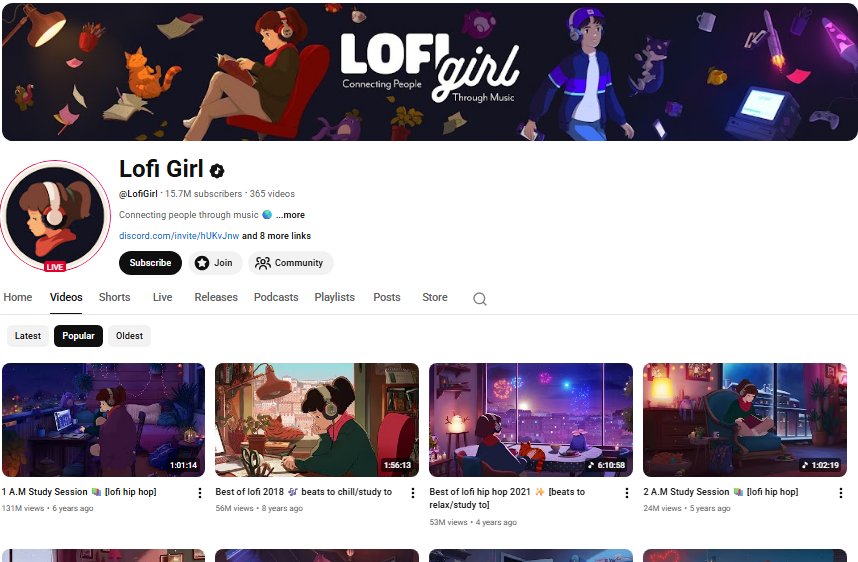
Lofi Girl | 15.7M Subscribers
What they post: Lofi Girl posts lo-fi mix songs and long live streams created by looping an iconic animated character.
What draws the audience back:
Lofi Girl is habit forming. Students use it while studying. Writers write with it. Workers work to it.
The visual imagery provides a sense of calmness.
The music is comforting.
The idea of having a shared quiet space creates an almost social connection between the viewer and Lofi Girl.
What to replicate: brand identity. One style. One look. Forever. Consistency = product. Polish for long-form. Stabilize audio. Avoid abrupt transitions. Use clean loops.
Quick tip: to create videos that viewers will come back and watch every day, be consistent.
BRIGHT SIDE
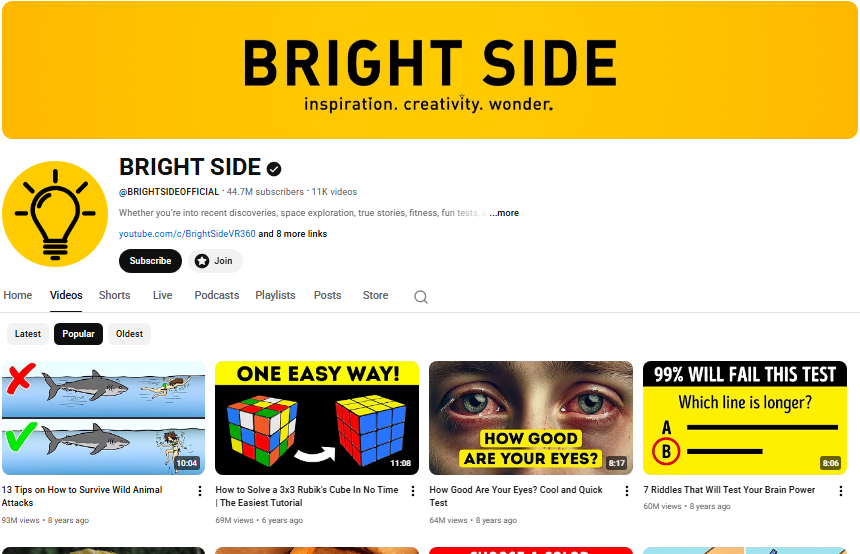
BRIGHT SIDE | 44.7M Subscribers
What they post: Bright Side posts animated explanation videos, fun facts, riddles, life hacks, simple science, and more.
Why viewers return:
Curiosity packaging. Bright Side uses curiosity-driven titles and introductions that create a “need-to-know” mentality. Additionally, Bright Side publishes many videos, therefore creating the impression of activity and giving viewers a reason to continue watching the channel.
What to copy: their production system. This is “factory-style” content. And while it’s not an insult, it is an example of templates, workflows, and repetitive scripting.
Editing note: rhythm matters. Motion graphics plus voiceover only works when the pacing is tight and the visuals change often enough to keep the viewer engaged.
WatchMojo
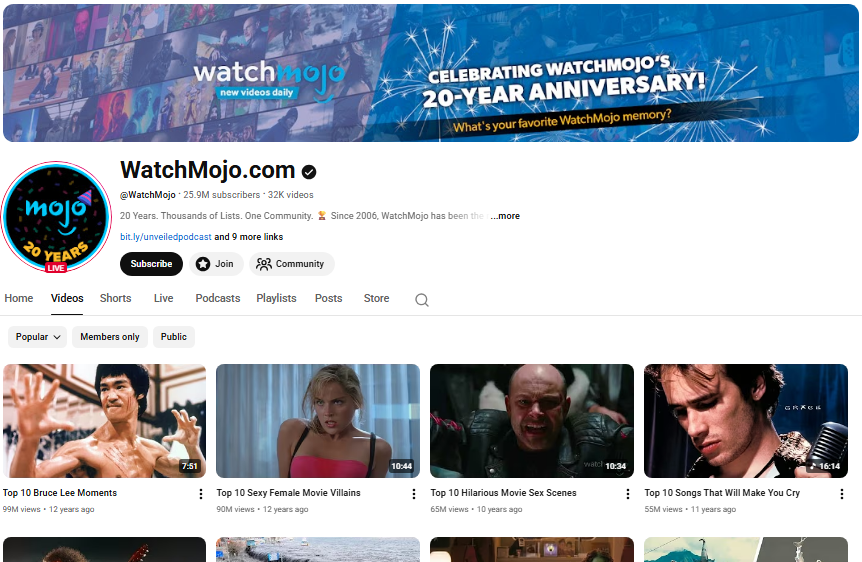
WatchMojo | 25.9M Subscribers
What they post: top ten lists across pop culture, movies, music, gaming, and history.
Anyone who has viewed a WatchMojo video has likely noticed that the format is addictive. People want to see which items made the list, and more importantly, they really want to know what ranked #1. It also makes for perfect background watching content.
What to copy: take a closer look at their title formulas and structure. This is one of the most obvious examples of how you can scale your faceless content using a repeatable framework.
Editing note: if you don’t pay attention, list videos can feel like slideshows. Stronger ones have faster cuts, consistent branding, clear on-screen text, and background music that keeps things moving but isn’t too loud.
Chills
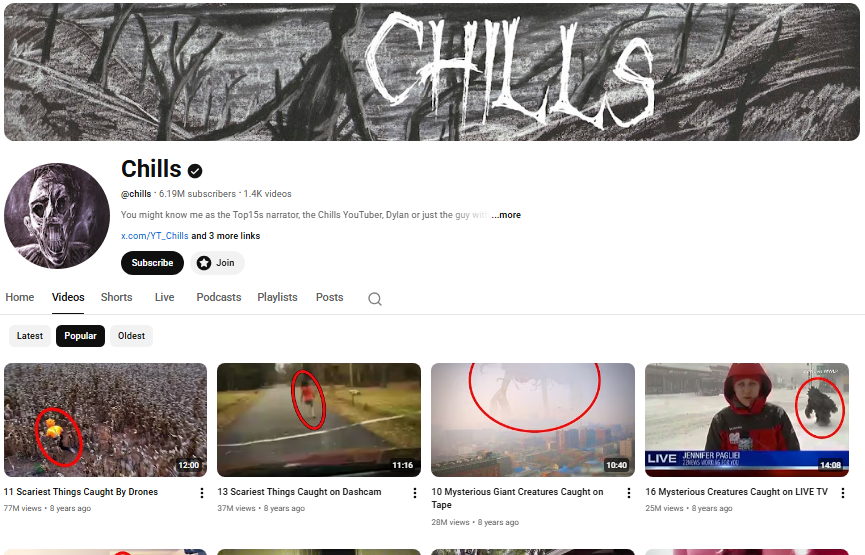
Chills | 6.19M Subscribers
What they post: creepy countdowns, mysterious footage, paranormal stories, internet legends, and more.
Why viewers return: their voice. Proves that you don’t have to show your face to establish a recognizable sound — your narration becomes your identity.
What to copy: the countdown format plus signature delivery. Many faceless creators attempt to deliver a generic sound. This channel does the opposite, and it works.
Casually Explained
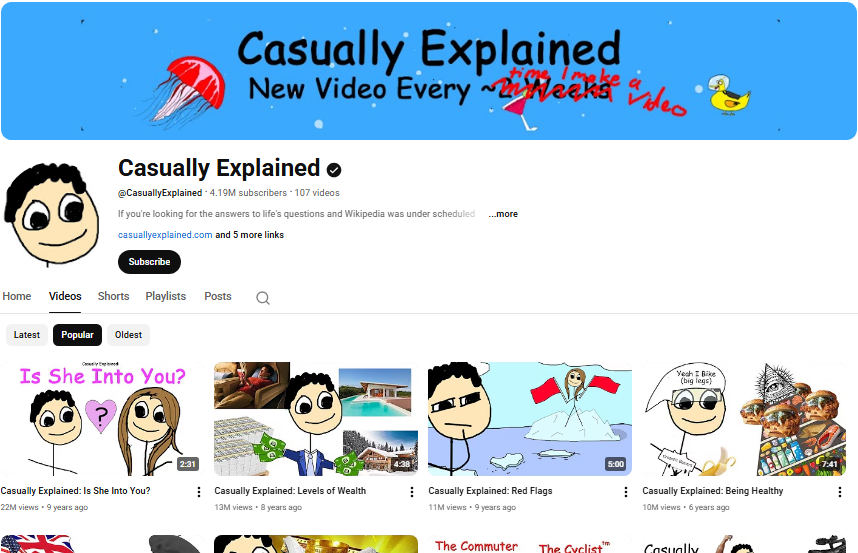
Casually Explained | 4.19M Subscribers
What they post: comedy explainers with stick-figure animation and dry humor.
Why viewers come back: the POV. People return because the writing feels personal and specific. It’s relatable without trying too hard.
What to copy: script-first production. If you’re building faceless channel ideas around comedy or commentary, your “voice” is your product even if your face never shows.
Editing note: timing is editing. The pauses, quick cuts, and tiny visual gags are doing a lot of work.
Mr. Nightmare
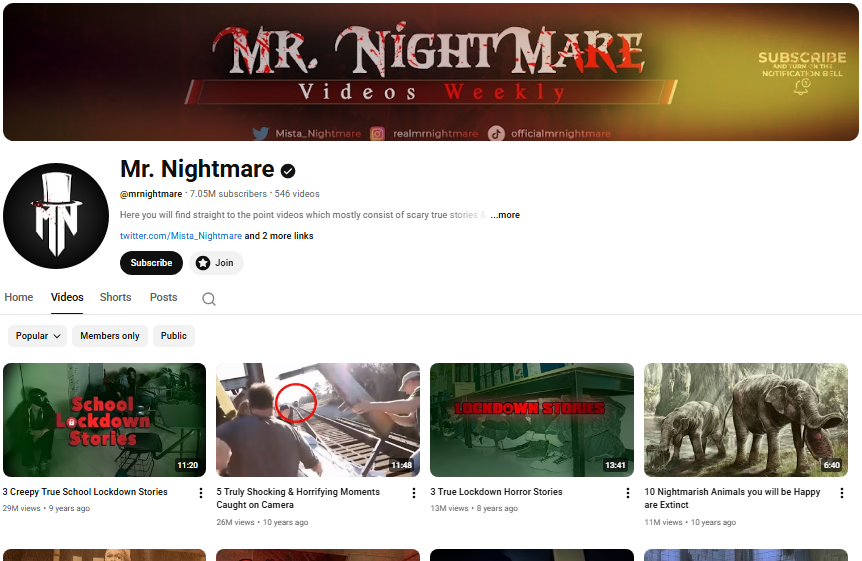
Mr. Nightmare | 7.05M Subscribers
What they post: scary stories and eerie narration.
Why viewers return: because it’s their ritual. I think many viewers treat this as a “podcast.” It has that feel, that delivery. You know what you’re getting every time. The channel itself has become a nighttime viewing habit for a lot of viewers.
What to copy: the way they tell the story and how they deliver it in an easy-to-follow, clear way. In some cases, strong stories told well (with good writing) will beat visually engaging videos with poor or no narrative.
Editing note: audio quality is everything. Clean voice, consistent levels, subtle ambiance. If your mic and mix are messy, people click off fast.
MrCreepyPasta
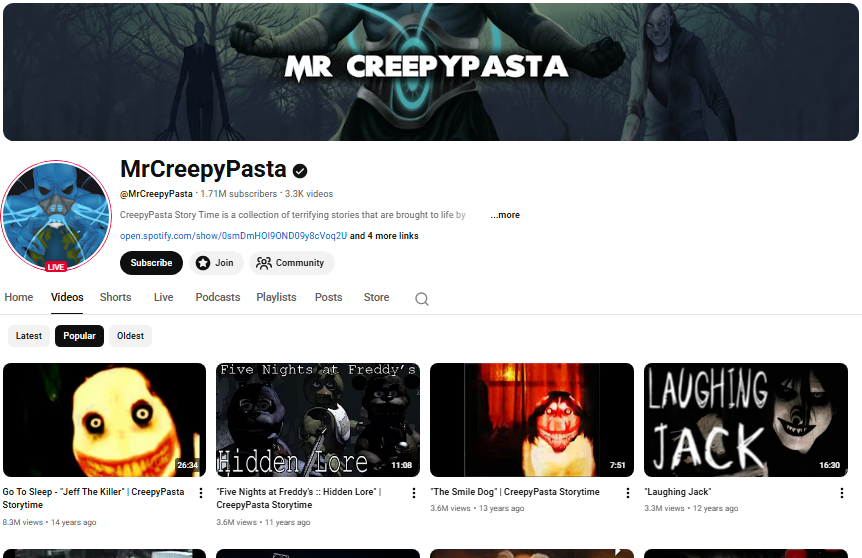
MrCreepyPasta | 1.71M Subscribers
What they post: narrated creepypastas and long-form scary stories.
It is very good for making binge-watching material, and his voice becomes comfortable to listen to over time. In addition, he does very well when placed in playlists — keeping the sessions going longer.
What to copy: his organizational skills and how he thinks in terms of series. He uses playlists, themes, and consistent thumbnails. Viewers enjoy knowing that there is more coming after what they just watched.
Editing note: a clean mix is needed for a long-form voiceover. The visuals should be supporting the tone and mood rather than confusing or distracting.
Kuti Bari
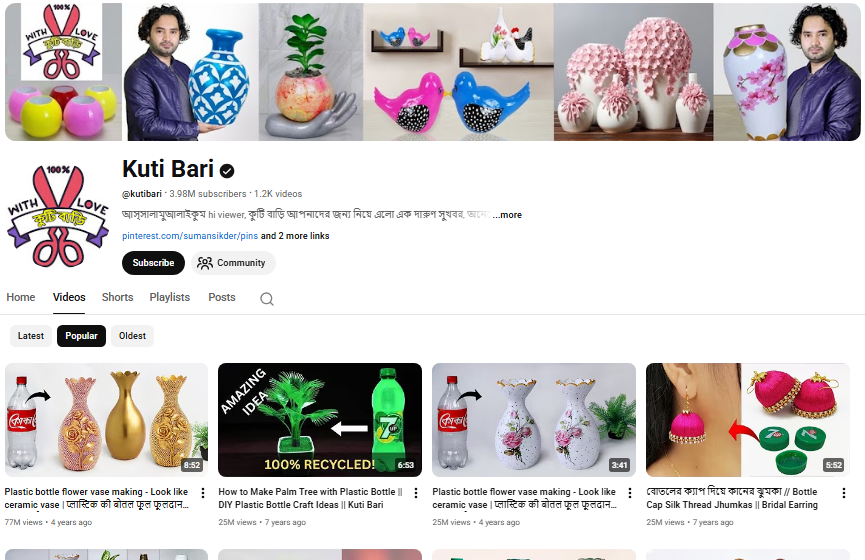
Kuti Bari | 3.97M Subscribers
What they post: hands-only DIY build and craft tutorials.
This is an example of a “transformation” channel. Watching something build from the ground up is pleasing to view, and it does not require a face. Viewers tend to consider the end product as the main character.
What to copy: a clear sequence of steps. These types of channels do best when it is easy to follow along. Good camera angles, show the viewer the progress clearly, and provide a satisfying ending or reveal.
Editing note: keep the dead air out. If a step takes three minutes to complete in reality, it may only take eight seconds in the edit. That keeps the fast-paced feeling intact.
Relaxing White Noise
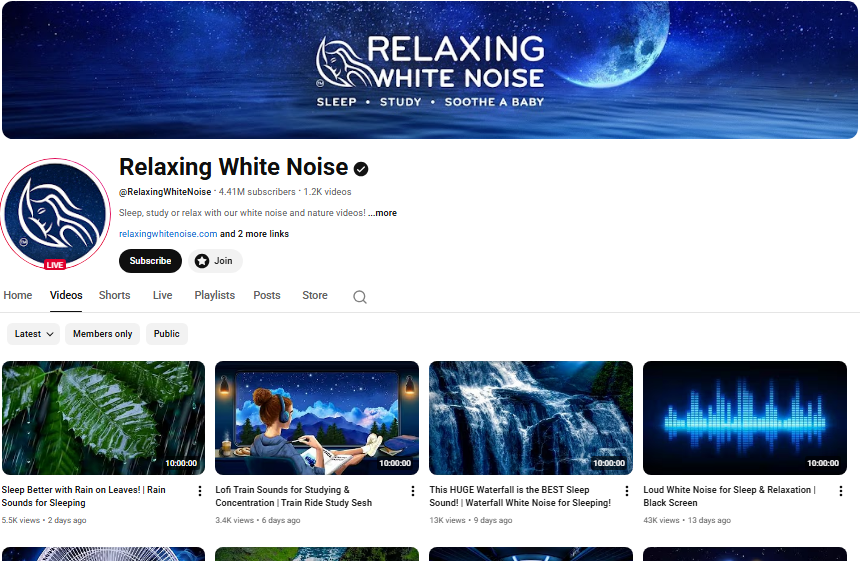
Relaxing White Noise | 4.41M Subscribers
What they post: long white noise tracks for sleeping, baby soothing, concentration, and relaxation.
If a sound helps someone fall asleep each night, they will keep returning. That is the greatest level of loyalty one could achieve on YouTube.
What to copy: their clear labeling and use long run times. People desire to know exactly what they are getting. They don’t want any unexpected surprises.
Editing note: use a steady, consistent audio track. Do not jump around in levels. Keep any possible distortion completely absent. Although there is some room for creative expression in this area, most of the success comes from reliability.
ASMR Zeitgeist
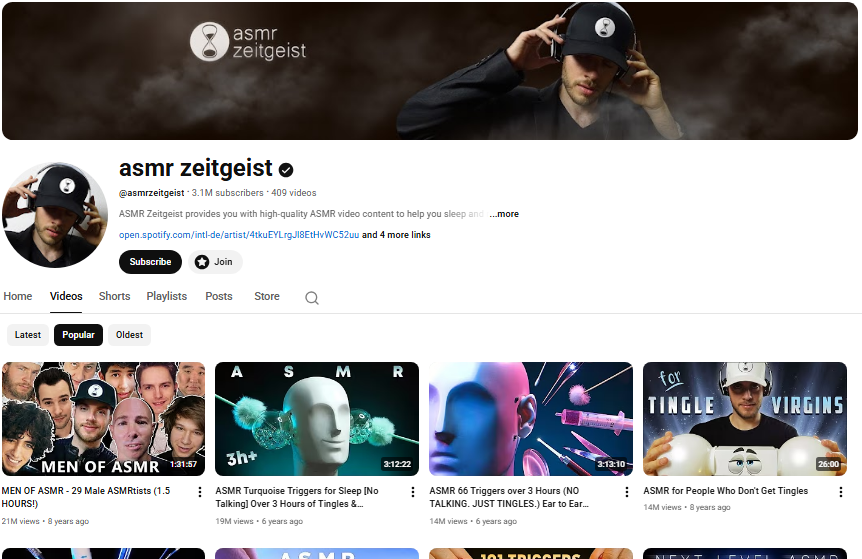
ASMR Zeitgeist | 3.09M Subscribers
What they post: high-end production ASMR, with a focus on creating themed productions and using high-quality audio.
Viewers return to this type of channel mostly due to personal preference — especially true for ASMR viewers. ASMR viewers are accustomed to finding specific triggers that they love and they tend to stay loyal to those who deliver them reliably. The same is true for production quality — it establishes trust.
What to copy: if you’re considering starting a channel similar to this, study their series formats and audio engineering. The same is true if you’re in the autonomous sensory meridian response (ASMR) field — your ability to produce consistent content matters more than your ability to create new or unique content.
Editing note: audio-first editing. Deliberate leveling, deliberate pacing, subtle cuts. The goal here is to highlight the importance of the audio.
Escaping Ordinary (B.C. Marx)
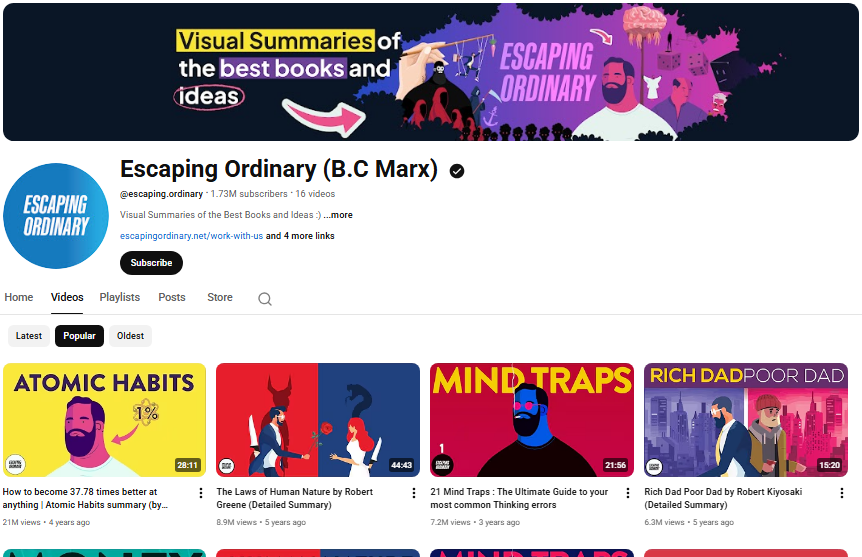
Escaping Ordinary (B.C Marx) | 1.73M Subscribers
What they post: visual book and idea summaries explained through animated-style video tutorials.
Why viewers return: save value. People re-watch these videos because the information provided seems useful to them. It’s the type of content that gets shared among friends saying “this explains it better than I can.”
What to copy: clean structure plus metaphorical visuals. These are explainer videos created in such a manner that they feel enjoyable to watch rather than homework.
Editing note: pacing > complexity. Winning animation is simple but visually appealing.
The Swedish Investor
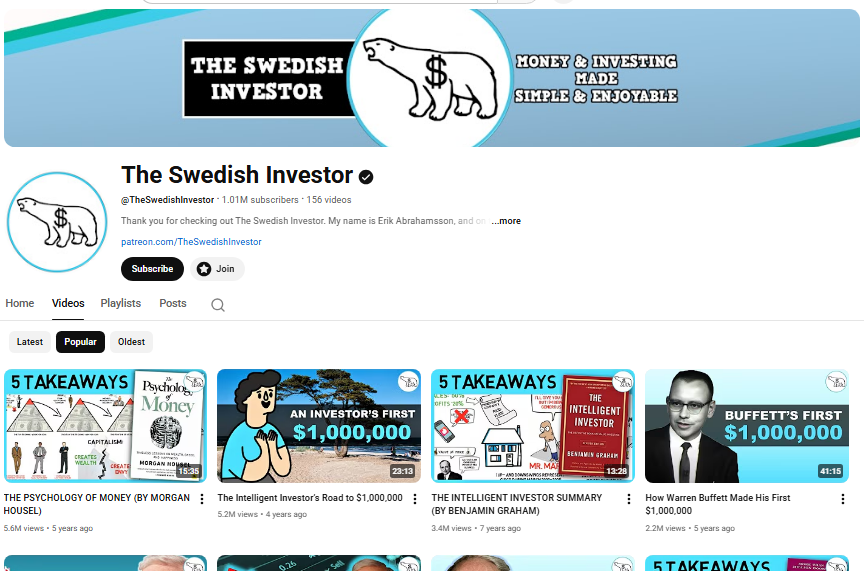
The Swedish Investor | 1.01M Subscribers
What they post: finance and investing explainers using clear frameworks and visuals.
Why viewers return: because it is clear and calm. There are many channels in finance, but few offer simple explanations of complex information. Thus, they gain trust with their audience.
What to copy: the ability for repeatable structures. The videos on this channel follow a structured approach; viewers learn faster and view the channel as a trusted option.
Editing note: visuals should reduce confusion. Clean typography, simple charts, clean VO. This is where “more editing” is not always better. Better editing is better.
What These Channels All Have in Common
By this point in time the pattern should be clear.
The “secret” isn’t being faceless — it’s replacing your face with something more predictable than any human face can ever possibly be: formatting.
Here are some quick checklist ideas that I’d take from these channels:
Branding consistency (thumbnails, titles, tone, pacing) that feels like what we’ve seen before.
Repeating your structural format, e.g. countdown series themes, story arcs, or utility formats.
An actual content engine, e.g. batching, templating, and having an actual content calendar.
Edits that create attention-friendly experiences, e.g. clean cuts, solid audio levels, as few “dead” seconds as possible.
Some reason to come back for more: comfort, curiosity, utility, trust, or just to binge.
One additional honest observation. Most people who try to go after “YouTube automation” do so because they want a side hustle that will operate on its own. And I totally understand why.
However, the YouTube channels that last usually don’t rely on full automation. They have systems in place. Systems imply you can produce quality over and over again.
If you think to yourself, “that’s cool… how do I start?”, then let’s make it workable.
How to Start a Faceless YouTube Channel Without Overthinking It
This next segment provides a straightforward, uncluttered path for your new channel. If you’re looking for a step-by-step guide, this is where it begins.
Step 1: Pick One Format That You Can Produce 30 Times
Choose a format that you can create 30 versions of:
Voiceover lists
Screen recordings and tutorials
Hands-only build
Ambient loops
Gameplay footage with voice commentary (yes, this applies to gaming too)
If you cannot see how you will create 30 videos using the same format, choose a new one. The last thing you need is a perfect niche — just find a process that you can repeat.
Step 2: Choose Your Niche Based on How Much Patience You Have
The first part of YouTube channel ideas comes down to excitement vs sustainability. While some niches may be very engaging, other niches may be dull but will still bring you money. For me personally, I always chose the way of sustainability.
By choosing your niche, you will be able to focus and develop content over the course of six months. This is when YouTube channel ideas go from theory into reality. While it is very easy to think of a niche, it is much more difficult to stay in a niche for six months.
Step 3: Develop a Mini Brand Kit in One Afternoon
You don’t have to have all your ducks in a row to create a recognizable brand. Here is a basic example of a “brand kit” which includes:
Thumbnail template
One font
Two colors
Consistent title style
You can easily spend weeks developing a design scheme, but these four items will help establish your visual identity without losing your mind.
Step 4: Create a Script Template That You Can Reuse
Whether you plan on adding voiceover or not, structure matters.
Below is a pre-structured template which makes it simple enough to generate multiple formats.
Structure of the template:
Hook: what will they get out of it
Set up: why is it important
Three to six main beats
Pay off
Close with one next action
Once you’ve created a basic structure for your scripts, you will find it much simpler to generate content because you won’t be starting from scratch with each video.
Step 5: Batch Your Workflow So You Don’t Burn Out
To avoid burnout, consider implementing a workflow that allows you to work in batches. Below is one possible weekly batch workflow:
Plan for the week (day 1)
Write scripts for the week (day 2)
Do all your voiceover recording or collect all your footage (day 3)
Edit all your videos (day 4 and 5)
Schedule all your videos (day 6)
Batching will also give you an advantage when you decide to open a second channel. This is because it helps you manage your time effectively. Also keep track of how long each video takes to edit. If every video takes ten hours to edit, at some point you will either quit producing or find ways to optimize your efficiency.
Step 6: Use Tools to Help You Rather Than Becoming a Tool for Them
A variety of AI tools and artificial intelligence options exist today for faceless channels. Examples of these tools include:
Generating outlines of scripts
Generating ideas
Cleaning up (for example, formatting) files
Captions (in some instances)
Voiceover AI generators and music generators are rapidly growing as choices for creating voiceovers and background tracks
It is worth remembering that your ultimate goal is to generate uniqueness while keeping consistency. When you look and sound similar to every other viewer, it will become much harder to attract new viewers.
Do you wish to use voice but record yourself? There are two options:
First option: working with a voice actor.
Second option: dubbing yourself for future translations once the channel has been proven successful.
Create and Ship Your Next Three Faceless Videos — Without Spending Weeks Editing Them
If you wish to create a faceless channel (and/or you do not desire to reveal your identity), then create everything simply. Choose one type from below and create and release at least three more videos using the style from the format you select. At this point, you will begin to see what you enjoy about the style and how you can expand upon it. You will also find ways to establish a routine, produce quality videos consistently, and most importantly, re-establish your enjoyment in producing them.
And if editing is what prevents you from moving forward with consistency, Vidpros offers a $100 trial — 1 week of professional video editing. With this trial, you can receive either 10 short-form videos or 1 long-form video. Our purpose is to allow you to remain consistent, provide you with quality videos, and above all, enable you to enjoy the process once again.
Frequently Asked Questions
Can faceless YouTube channels be monetized?
Yes. Many do. The key to success is original script writing, original format, and consistent editing. This is what converts “faceless video” into a real channel. Not simply posting random content.
How are successful faceless YouTube channels different from those that are unsuccessful?
Successful faceless YouTube channels rely on their consistency. Consistency of format, consistency of tone, consistency of theme, and consistency of quality. The fact that they have no face does not make them successful. Consistency makes them successful.