
Quick note before we dive in: If you prefer a done-for-you option instead of browsing freelance sites, you can also hire a dedicated video editor through Vidpros with a simple monthly subscription. They match you with dedicated editors at a 1:4 ratio, meaning each editor works with only four clients, so you’re not competing for attention with dozens of other people.
Now, onto the sites.
YouTube is only getting bigger, and the bar for quality keeps rising. A few years ago, you could film on your phone, do basic cuts, and call it done. People want to see good stuff now, the system pushes good content to the top, and other creators are already making better videos than before.
Where do you actually find freelance video editors who can edit your videos well?
Someone who can transform your raw footage into engaging visual stories, with video animation using the right video editing software, and won’t disappear after one project?
That’s what we’re covering here. Seven platforms where YouTubers actually find editors. Some are massive marketplaces with thousands of options, others are smaller and more focused. Each one works differently and fits different situations.
If you’re still figuring out how to hire a video editor, what skills to look for, what to avoid, and how to pick the right person, we put together a complete hiring guide that breaks everything down step-by-step.
Let’s look at where you should be searching.
YT Jobs
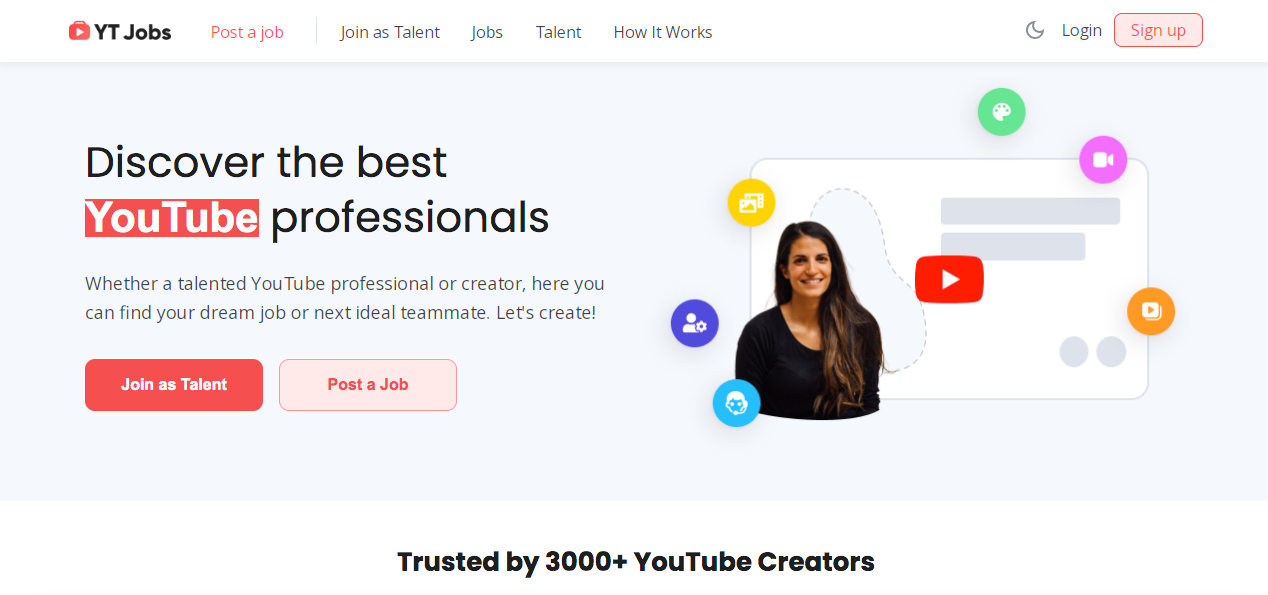
Unlike other freelance sites where you’re competing with people hiring graphic designers and programmers, YT Jobs is just for YouTube. Everyone here either makes videos or works on videos. That’s it.
The numbers look good on paper: 500,000 users, 10,000 job listings at any time, and 70% of freelancers find regular work here. Editors make around $30 per hour on average, which is decent but not outstanding.
Here’s what actually happens when you use it:
You sign up for free, post what you need, and set your budget, then you wait for editors to apply. You can also browse through profiles yourself and reach out to people whose work you like. Everyone’s portfolio is right there, mostly YouTube content, so you can see if their style matches yours.
The good part? These editors get YouTube and your target audience. They understand pacing for retention.
They know how to edit for mobile viewers and understand your creative vision. They’ve worked on channels similar to yours. You’re not explaining what a jump cut is, providing extensive creative direction, or explaining why the first 30 seconds matter. These are skilled video editors who understand the content creation process and can adapt to different editing styles.
The downside? It’s still pretty new, which means two things:
First, there aren’t as many video editors to choose from compared to massive sites like Upwork. Second, the vetting process isn’t strict, anyone can sign up and call themselves a YouTube editor. You’ll find genuinely skilled people alongside beginners who just learned Premiere last month.
The platform works best for project-based stuff.
Need someone to edit a series? A batch of videos? One big project? Perfect. But if you’re looking for someone to edit one video every week for the next year, you might want something with more structure.
Communication happens on the platform, which is OK but not great. No fancy project management tools. No automatic reminders. You and your editor figure it out yourselves.
Is it worth trying? Yeah, especially if you’re a YouTuber. The focus on video content means you’re more likely to find someone who actually understands what you’re making. Just don’t expect the polish and support of bigger, more established platforms.
Upwork
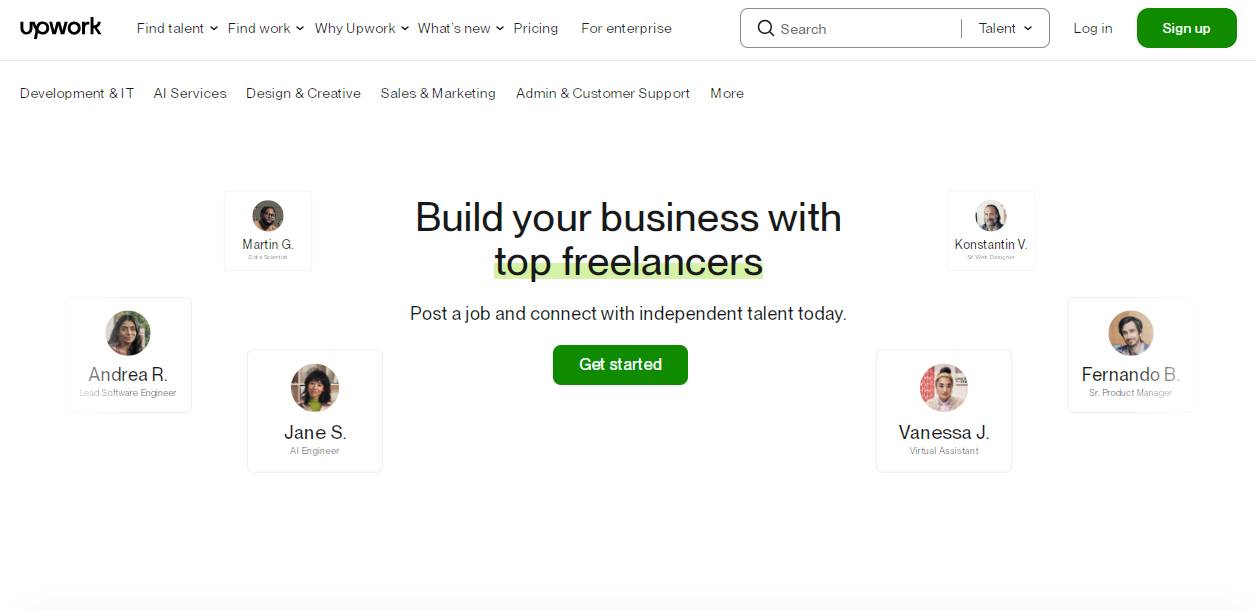
When two giant freelance sites (Elance and oDesk) combined in 2015, they created what we now know as Upwork. If you’ve ever searched “hire a freelancer online,” you’ve probably landed here. It’s massive: 18 million freelancers, over 800,000 clients, and billions of dollars changing hands every year.
Here’s the reality of using Upwork:
You post a job, and within an hour, you might have 20 proposals. Sounds great, except now you need to read through 20 pitches from people in different countries, with varying levels of experience, all charging different rates. Some proposals are three sentences long, others are essays. Half of them didn’t actually read what you needed.
Finding someone good takes work. You’ll spend time checking portfolios, reading reviews from past clients, and trying to figure out if someone’s 4.9-star rating actually means they’re reliable. The sound editors get snatched up quickly, so the available ones might be new or might be sitting there for a reason.
The platform charges a 10% fee on top of whatever you pay your editor. So if you agree on $500 for a video, you’re actually spending $550, not terrible, but it adds up over time.
What makes Upwork valuable is the sheer number of people on it. Need experienced video editors who specialize in social media videos or gaming content? They’re on there. Want someone who knows DaVinci Resolve, Avid Media Composer, or Premiere instead? You’ll find them. Looking for someone in your timezone? Filter for it. The options are endless, from editors skilled in Adobe Premiere Pro to those who excel at creating visual appeal, which is both a blessing and a curse.
Payment protection is solid because the money sits in escrow until you approve the work, so you’re not getting scammed. And if you find someone great, you can work with them again and again without reposting jobs.
Just know this, you’re trading time for options. Expect to spend a few hours sorting through applications, some editors to ghost you after one project, to kiss a few frogs before you find your person. But once you do find them, Upwork makes it easy to keep working together.
Fiverr
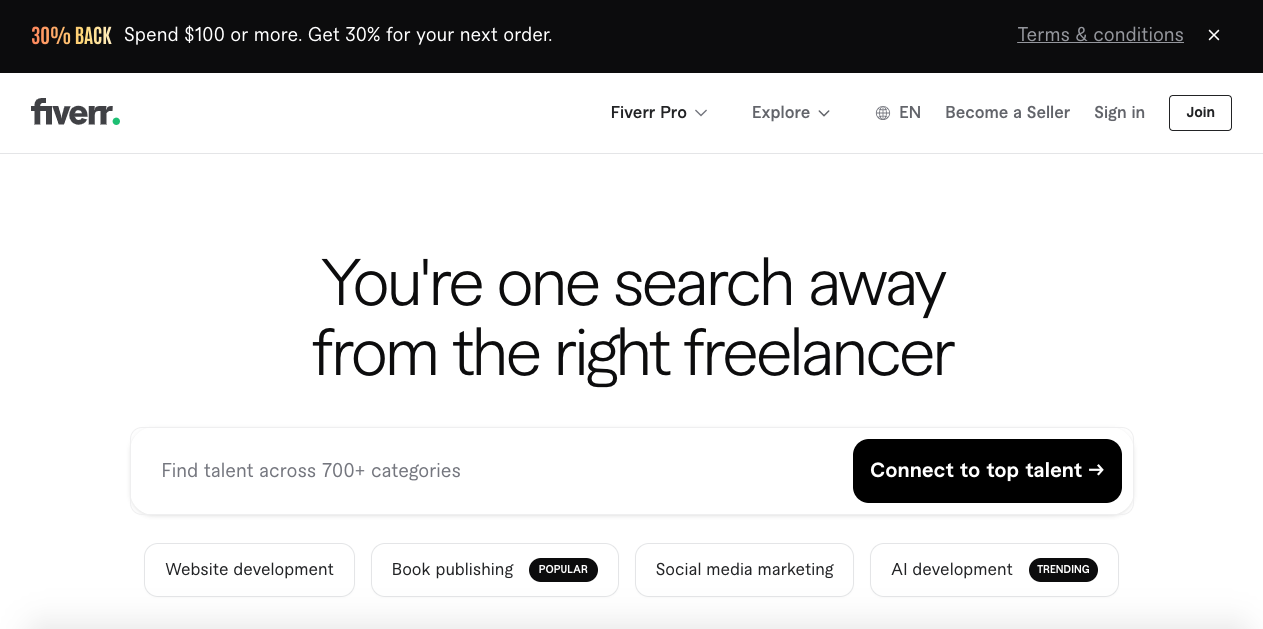
Fiverr started with a simple idea back in 2010: everything costs five bucks. That’s long gone now, but the platform still attracts people looking for affordable, fast work. Four million sellers, three million buyers, and a system where freelancers create “gigs” that you can browse like a menu.
The gig system is what makes Fiverr different. Instead of posting a job and waiting for proposals, you scroll through listings like you’re shopping on Amazon. “I will edit your YouTube video for $50.” “I will add motion graphics to your vlog for $75.” You see examples of their work, read reviews, check delivery time, and buy it. Done.
This works great when you need something simple. A quick thumbnail from graphic design? An intro animation? Some sound effects or background music selection? Basic cuts on a 10-minute video? Fiverr editors can knock that out in a day or two. You’re not building a relationship here, you’re buying a service.
The problem arises when your needs become complicated. You want custom transitions that match your brand? The editor might charge extra. Need revisions because they didn’t quite get your style? That’s another fee. What looked like a budget-friendly video editing service turns into $150 once you add all the extras.
Quality is all over the place. Some editors on Fiverr are genuinely talented people who offer low prices to build their portfolios. Others are churning out template edits as fast as possible. The reviews help, but they’re not always honest. A seller with 500 five-star reviews might still deliver mediocre work because most buyers don’t want to leave bad feedback.
Fiverr takes 20% of whatever the seller charges. So if you pay $100, the editor only gets $80. This means good editors eventually leave for platforms that pay better, leaving you with whoever’s willing to work for less.
Here’s when Fiverr makes sense: you need something small, you need it fast, and you’re okay with average quality. Don’t expect someone on Fiverr to become your long-term editor. Expect them to do the job you paid for and move on to the next client.
Freelancer
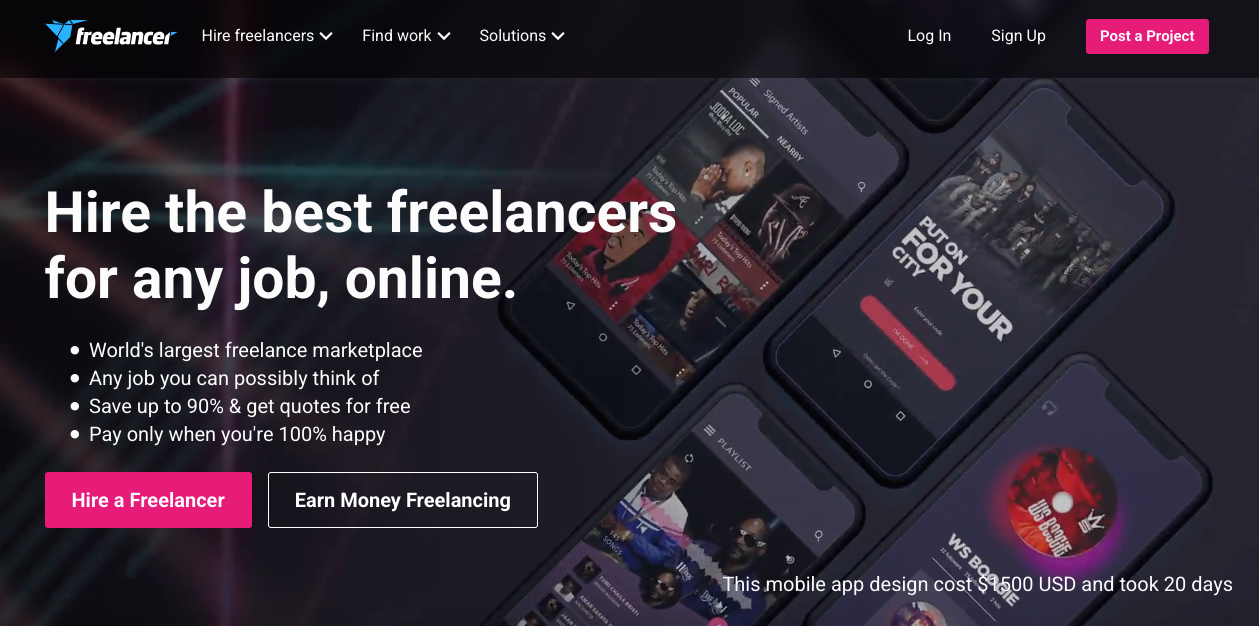
Freelancer started in Australia back in 2009, and it’s grown to 76 million users. Yeah, 76 million. That’s huge, but you rarely hear people mention it when they talk about hiring freelancers. It’s like the middle child of freelance platforms, always there, often overlooked.
The site works on a bidding system. You post your project, freelancers submit proposals with their prices, and you pick the one that seems best. IT and software projects make up about 34% of the work here, design and media make up 31%, and writing makes up 13%. Video editing falls somewhere in that design-and-media chunk. You’ll find everyone from beginners to skilled professional video editors who understand industry trends with portfolios full of promotional videos and high-quality videos.
Here’s the real experience, you post a job saying you need a YouTube editor. Within hours, you’ll have 30 to 50 bids. Some will be $10 per video from people overseas. Others will be $200 per video from editors with professional portfolios. Most proposals will be copy-pasted templates that don’t actually address what you asked for.
Sorting through all these bids takes time. You’ll check profiles, watch sample videos, and read reviews from other clients. The ratings system helps, but it’s not perfect. Someone with a 4.8 rating and 200 reviews is reliable while someone with a 5.0 rating and three reviews? Could be great, could be brand new.
Competitive bidding means you can get lower rates, but cheap usually means you’re working with editors in countries where the cost of living is low. Nothing wrong with that, but communication can be tricky. Time zones matter and also the English fluency matters. So do direct communication skills and the ability to handle client feedback effectively. Sometimes you spend more time explaining what you want than you would’ve spent just editing it yourself.
Freelancer takes 10% from the editor, with a minimum fee of $5 for fixed-price projects. So if you hire someone for $50, they actually get $45. If you hire someone for $500, they get $450.
Payment protection exists because the money is placed in escrow, and you release it when you’re completely satisfied with the work. That’s good, but there’s no guarantee the editor will actually finish. People disappear. Deadlines get missed. You might hire someone who ghosts you after the first video, leaving you back to square one.
The platform offers both hourly and fixed-price options. Fixed price makes more sense for video editing, you know exactly what you’re paying per video. Hourly rates can balloon fast if the editor works slowly or pads their hours.
Freelancing works if you have patience and you’re good at vetting people. Don’t hire the first person who bids. Don’t necessarily hire the cheapest. Look at their actual work, message them with specific questions, and start with a small test project before committing to anything significant.
PeoplePerHour
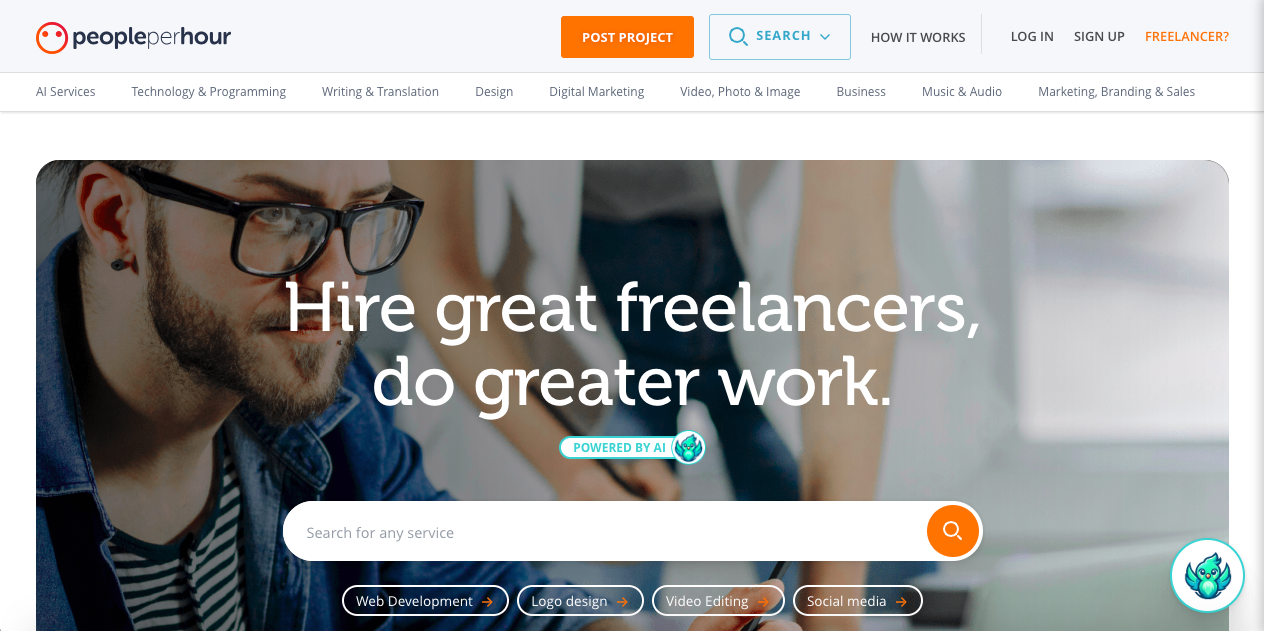
PeoplePerHour launched in the UK in 2007 and has been quietly operating ever since. Four million freelancers, over a million businesses served, working in 150+ countries. The numbers sound impressive, but in reality, it’s smaller and less chaotic than Upwork or Fiverr.
What makes it different? They use AI matching to connect you with freelancers. You post a job, their system analyzes it, and suggests people who might fit. In theory, this saves you time. In practice, the suggestions are hit-or-miss. Sometimes you get perfect matches. Sometimes you get recommendations that make no sense.
You can also search manually by browsing through categories. Video editing is under “Video, Photo & Image,” where you can find video editing talent with a range of technical skills. Editors set their own prices, and you can see their hourly rates or project-based fees upfront. Many freelancers have certifications visible on their profiles, and some even showcase over a decade of experience in brand identity and social media management, indicating they’ve been vetted. But certifications don’t always equal quality.
The platform uses escrow payments, which is smart because your money sits safely until the work is done and you approve it. This protects both you and the editor if something goes wrong, PeoplePerHour can step in and help resolve it.
Here’s the weird part about pricing, PeoplePerHour takes a sliding commission from freelancers, they charge 20% on the first £250 that an editor earns from you. Then it drops to 7.5% for earnings between £250 and £5,000. Above £5,000, it’s only 3.5%. This means editors have an incentive to keep working with the same clients long-term because they keep more of their money.
For you as a client, this could be good. Once you find an editor you like, they’ll want to stick with you because the fees get lower. You’re building a relationship that benefits both sides.
But finding that person takes work. The platform has millions of freelancers, but not all of them are active. You’ll see profiles that haven’t been updated in months. You’ll message people who never respond. Availability is inconsistent.
Reviews and ratings help filter out the flakes, but you still need to do your homework. Check portfolios carefully, read what past clients said, look for patterns, if three people mention that someone missed deadlines, believe them.
PeoplePerHour also offers “Hourlies,” which are essentially fixed-price services similar to Fiverr’s gigs. An editor might offer “I’ll edit a 10-minute YouTube video for £75” as an Hourlie. You buy it, they do it, done. This works for simple, straightforward projects.
The platform isn’t bad, it’s just not as popular as the bigger names, which means fewer options but also less noise. If you’re in the UK or Europe, it might be worth trying because you’ll find more editors in compatible time zones. If you’re in the US, you’ll see more options elsewhere.
Toptal
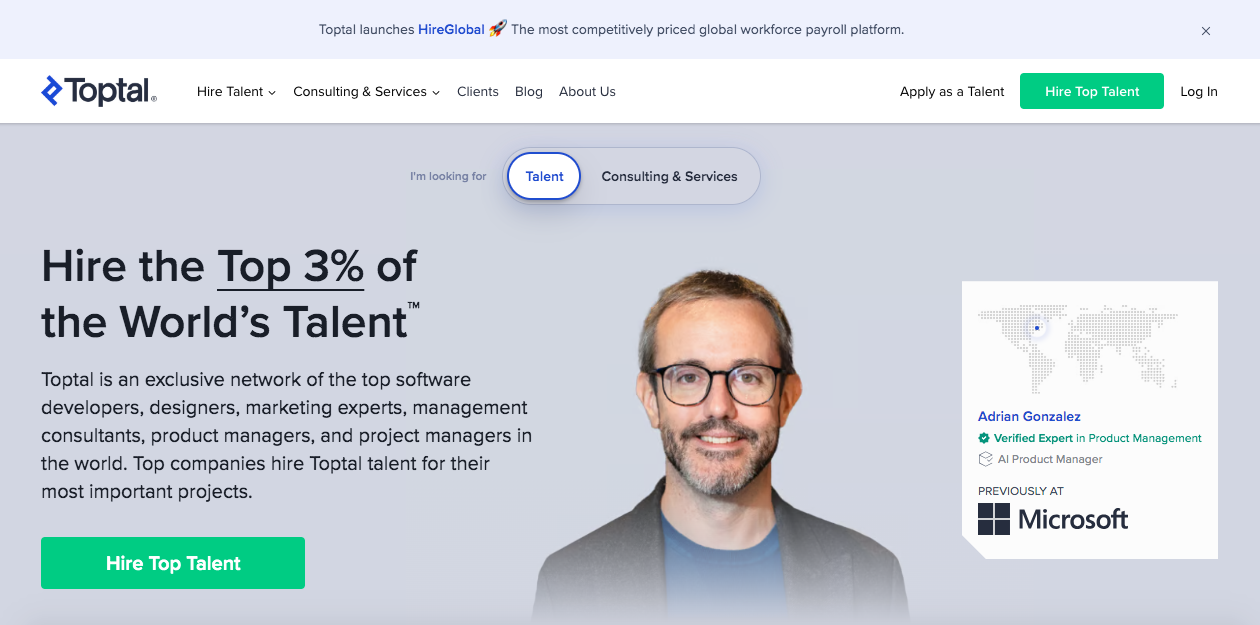
Toptal launched in 2010 with a pitch that sounds amazing: they only accept the top 3% of freelancers. Through a rigorous screening process, they verify technical skills, portfolio quality, and the ability to deliver content that matches the project’s vision. Everyone goes through multiple interviews to assess their creative vision and editing abilities before they’re allowed on the platform. You’re not sorting through hundreds of applications, you’re getting matched with elite talent.
And they mean elite. These are editors who’ve worked on commercials, films, or major brand campaigns, they know their stuff. If you hire someone from Toptal, your videos will look expensive because you’re paying costly rates.
Here’s how it works, you don’t browse profiles instead, you talk to Toptal, explain what you need, and within 48 hours, they send you candidates and you interview them. If you like someone, you get a two-week trial period to test them out risk-free. If it doesn’t work, you don’t pay, but if it does work, you keep going.
Toptal takes up to 50% of what you pay, so if you’re paying $100 per hour for editing, Toptal takes $50, and the editor gets $50. This is why Toptal editors charge so much, they need to make up for the cut they take.
You’re also looking at minimum commitments. Most editors on Toptal want to work 20 to 40 hours per week. That’s not “edit my weekly YouTube video” money. That’s “I need someone editing content full-time” money. We’re talking thousands of dollars per month.
For most YouTube creators, this is overkill, unless you’re running a channel that makes serious revenue, or you’re a business using YouTube for marketing, Toptal doesn’t make financial sense. You’re paying for a level of polish that your audience probably won’t even notice.
But if you do have the budget? The experience is smooth, no back-and-forth negotiations, no wondering if someone’s legit and no dealing with flaky freelancers who disappear. You get a professional who shows up, does the work, and delivers on time. That’s what you’re really paying for, reliability and zero headaches.
Toptal is for creators who value their time more than their money, everyone else should look at the cheaper options first.
Behance
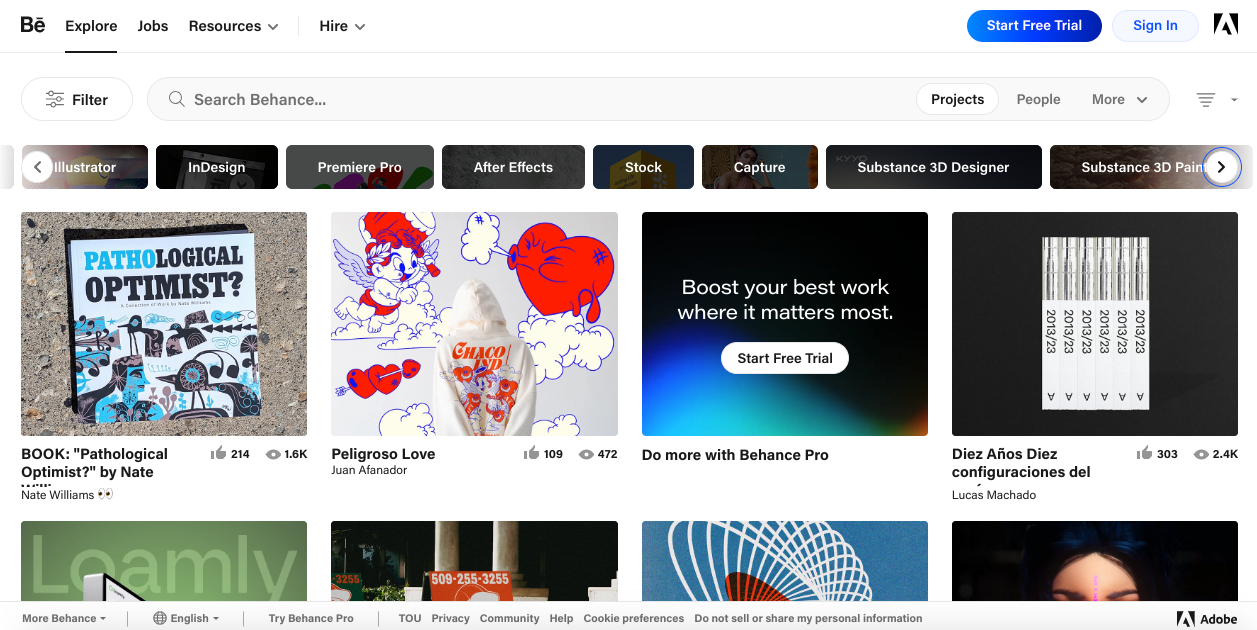
Behance launched in 2006 as a platform for creative people to showcase their work. Adobe bought it, and now it’s basically the Instagram for designers, artists, and video editors. About 40 million people visit every month, mostly to browse cool projects and get inspired.
Here’s the thing: Behance isn’t built for hiring, it’s built for portfolios. Editors post their best work to get noticed, but there’s no formal system for job postings, contracts, or payments. It’s more like a fancy resume site than an actual freelance marketplace.
So why would you use it to find an editor? Because the work speaks for itself.
When you search ‘find video editors’ on Behance, you see actual finished projects, not just descriptions or promises, but real videos they’ve edited. Watch how they work with video clips, their approach to visual storytelling, and whether their editing styles match your needs. You can browse portfolios, judge the quality, and decide if their style matches yours. It’s visual proof of what they can do.
The search and filter tools let you narrow things down. You can filter by location if you want someone in your time zone, by the software they use to create the final cut, like Adobe Premiere Pro, and evaluate their technical skills across different project types. You can also look at specific project types, such as vlogs, commercials, or music videos.
Once you find someone whose work you like, you message them directly through the platform. There’s no proposal system, no bidding, no intermediary. You say, “Hey, I like your work, want to edit my YouTube videos?” and negotiate from there.
The best part? Behance doesn’t charge commissions. Whatever you agree to pay the editor, that’s what they get, no platform fees affecting their earnings or inflating your costs.
The worst part? No protection, Escrow payments, no dispute resolution, and no contracts through the platform. You and the editor have to figure all of that out yourselves. If someone takes your money and disappears, Behance can’t help you.
There’s also no vetting, anyone can create a Behance profile and upload projects. The editor with a beautiful portfolio might be a professional with 10 years of experience, or a student who has edited three videos in total. You have no way to know unless you ask.
Checking how active someone is helps, and you can look at how many projects they’ve posted and when each was posted. Someone who posted 20 projects over the last two years is probably working regularly or someone who posted three projects five years ago probably isn’t available.
You can also see how the community reacts to their work, especially for long-form content. Projects get “appreciations” (basically likes) and comments from other creatives. High engagement usually indicates a good job, but it’s not a guarantee of reliability or availability.
Some editors list job opportunities on their profiles, but most don’t. You’ll need to reach out and ask if they’re taking on new clients. Response times vary wildly, like some reply within hours, others never reply at all.
Behance works best as a discovery tool, not a hiring platform. Use it to find editors whose style you love, then take the conversation off-platform to work out the details. Set up your own contracts, use your own payment methods (PayPal, Venmo, bank transfer), and manage the project yourself.
It’s extra work, but you get direct access to creative talent without platform fees or artificial restrictions. Just know what you’re signing up for, this is the DIY approach to hiring an editor.
What happens when you stop video editing your own videos
Most YouTubers start the same way: film, edit, upload, repeat. You’re doing this right now, aren’t you?
Here’s what changes when you stop:
Your upload schedule becomes predictable instead of stressful. Film three videos in one day, hand them off, and they’re ready when you need them, no more rushing edits at midnight or skipping uploads because you ran out of time.
You finally see what viewers see. An editor watches your footage with fresh eyes as a content creator, transforming raw video footage into an engaging final product that better tells your story, and cuts the boring parts you missed while filming. They’re honest, they’ll let you know when something drags.
The math is simple: editing takes 8 hours per video. That’s 64 hours monthly you could spend filming, engaging with comments, or planning content. Your videos look consistent because one person handles everything. They become familiar with your brand guidelines and content creation process, producing high-quality video content that resonates with your audience, they recognize your style instantly.
Find someone good, keep them around, learn your jokes, your pacing, and your audience. That partnership is what grows channels.
Should you hire video editors as freelancers or pay for a production company?
Imagine hiring a freelancer for $75 per video for the first few months. It could be amazing, but then they raise rates, book a vacation during your busiest upload week, and suddenly they’re slower to respond because they’ve found a better-paying client. You’re dependent on one person to enhance video content and meet your deadlines.
That’s freelancing, personal, affordable, flexible, but utterly dependent on one person who might disappear.
Now imagine a production company where you pay triple, but you get a whole team. If one person gets sick someone else takes over so deadlines are always met, quality stays the same, and everything runs professionally and smoothly, but you’re spending hundreds a month, and sometimes they over-polish your content until it loses its raw YouTube feel.
The choice? Under 10,000 subscribers, hire a freelancer. Between 10,000 and 100,000, it depends on your revenue. Over 100,000 or using video for digital marketing, consider a company.
But honestly, it’s less about subscriber count and more about what you can afford and what keeps your content flowing without driving you crazy.
Finding the best video editors: The real cost of going professional
Here’s the catch with companies: they’re expensive.
We’re talking hundreds or thousands of dollars a month, money most small channels don’t have. You’re also not their only client, so your video sits in a queue with everyone else’s.
If you need a last-minute change it’s too bad because agencies have strict systems and can’t adjust quickly like a freelancer would.
Sometimes they over-polish everything, too. Your authentic, raw YouTube video comes back looking like a corporate commercial, that’s not always what your audience wants.
Your choice ultimately depends on your budget and goals. Start with freelancers if you’re new, consider companies once you’re making serious revenue, or explore middle-ground options like Vidpros with their 1:4 editor ratio if you’re growing somewhere in between.
The right editor, whether solo or part of a team, saves you time, improves your content, and helps your channel grow. Pick what fits your situation right now, not what sounds impressive. Post a clear job post, review portfolios carefully, and don’t hesitate to request client feedback from their previous work.
Whether you need a single video editing or ongoing video editing services, the right video editor will help you create compelling content for your YouTube channel.