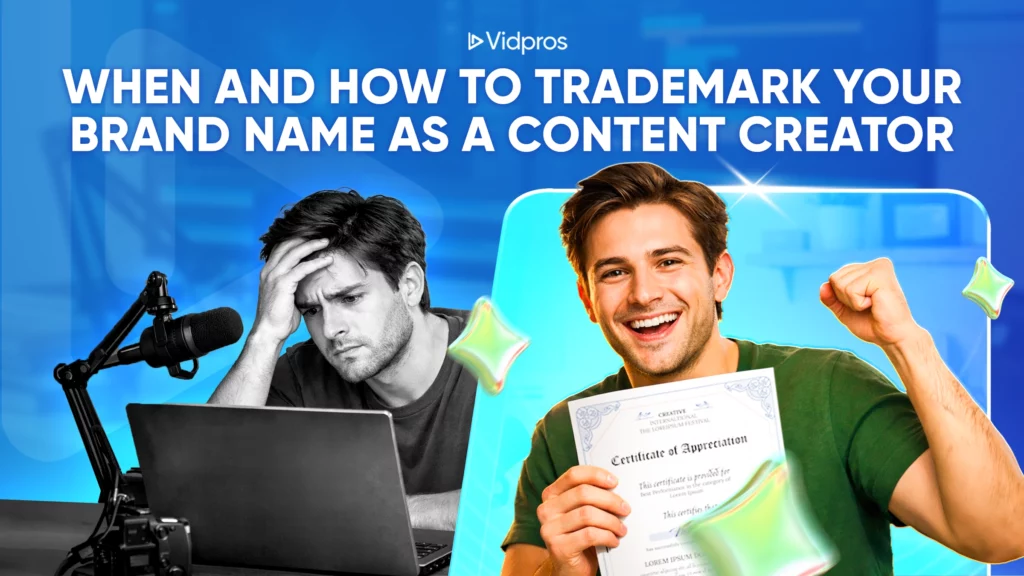
“I’m just a creator. My business isn’t Apple. Why would anyone steal my name?”- that’s what you’re probably thinking.
If you’re reading this and making decent money or (panning on) growing fast, the answer is simply: You’re more valuable than you think, and someone might try to scoop your name. That’s exactly why you need to apply to trademark brand before someone else does. Not sometimes. Not if you feel like it. Now.
It sounds dramatic, but it’s happening more often than you think. In 2025, more than 824,192 new trademark applications were filed in the U.S. alone, as per the United States Patent and Trademark Office (USPTO gov database.)
That’s almost double what it was a decade ago. And buried in that flood are creators, small businesses, and yes, opportunists who file first and fight later.
Take Blogilates (Cassey Ho)– she learned this the hard way when copycat companies started selling merch under her name before she owned the mark. The creator world is full of cautionary tales like that. Because your follower count doesn’t equal ownership.
The government does. And the only way to prove that ownership is to apply to trademark brand names, logos, or phrases tied to your services.
In 2026, electronic filing fees typically start at $350 per class of goods or services, which are non-refundable if the application is rejected. The trademark registration process typically takes 12 to 18 months from filing to final approval. If your trademark application is approved, it will be published for 30 days to allow others to oppose it.
Trademarks 101: What it does (and doesn’t do)
A trademark (or service mark if you’re offering services) is a legally enforceable right that protects the identity of your brand; the words and logos you use to sell your services. That’s why creators who don’t apply for a trademark often find themselves in a nightmare legal battle in their industry later on.
And it’s NOT just a logo, but it can also be:
- a word or phrase
- a sound
- an image
- even certain colors or combinations
Trademark: protects the name or logo for goods (merch, products, digital downloads.)
Service mark: protects services (like online coaching, video production, content channels, teaching) etc.
If you register it federally (not just on social media), you get nationwide exclusive rights to that mark for the things you sell.
…You have to understand that just registering your business name with your state does not give you trademark rights. It only prevents someone else in your state from using that exact legal name in an official and legal way.
But, that’s nowhere near enough if someone in another state (or another platform for that matter) decides to use your name too.
You CAN distinguish between the two, because an unregistered trademark is not enough and you can expect it to be.
Even if you’ve been using your name everywhere and people recognize you, you only have common law rights, and those are weak:
- They only apply where you actually use the name.
- You can’t really maintain it, meaning that you can’t stop someone nationally from registering the same or similar mark.
- You might end up in federal court with a huge legal bill just to defend it.
If you’re serious about your brand you must apply to trademark brand at the federal level, not just be “using it” until you get enough traction. (And by the way, that’s exactly when someone else will try to take it: the moment you start getting traction.)
Trademark vs. copyright: Two different things
To differentiate the two, remember this sentence:
Copyright protects your VIDEOS; being a trademark owner protects your BRAND.
If your channel name, slogan, or podcast title has real value, that’s what you trademark.
If your content (videos, scripts, songs) has creative value, that’s copyright.
The problem is, creators blur those lines.
A service mark protects the service you offer (like coaching, education, or even entertainment), and for creators, that’s the one that matters most.
Example: A podcast host trademarks their show title under “entertainment services.” A YouTuber selling merch registers under “apparel.”

You can file both under one umbrella if you want total protection.
Goldman Sachs predicts the creator economy could reach $480 billion by next year (2027). And where there’s money, there’s theft from competitors or just bored people sometimes (yes, it happens.)
The more valuable your brand gets, the more worth it becomes for someone to file ahead of you and you’ll have to take legal action to stand your ground.
When to trademark your brand name?
In 2021, Meta PC filed for “Meta” before Facebook rebranded. When Zuckerberg’s team later tried to claim it, they faced a multimillion-dollar negotiation.
Now, imagine that happening to YOUR creator or service mark.
Let’s say you build your following, your merch, your website, your domain… and one day, you get a “cease and desist” from someone who says they now own your brand name.
Typically, most creators don’t delay because they’re lazy, they delay because they underestimate the future value of their own business name. There’s this false belief that trademarks are only for corporations with lawyers, suits, and fancy boardrooms.
A lot of content creators think a business name on Instagram or YouTube is enough, or that owning a domain means they’re safe.
The right time to apply to trademark brand is before you explode, not after you already have thousands of followers and someone else sees your heat and decides they want it too.
What if you’re still testing names or experimenting?
That’s fair. Not everyone nails their brand name right away.
If you’re still brainstorming, and you don’t want to address this now, at least search the USPTO database for conflicts. It’s free, public, and surprisingly easy to use. You can check if a similar name or mark already exists in your category of services.
If your name is clean (and you’re starting to see traction), that’s the moment to apply to trademark brand. You just need intent to use the name in commerce. The USPTO even has an “intent-to-use” filing basis that lets you reserve your name before you fully launch.
Note: If it passes examination, the USPTO publishes your mark publicly before granting the registration. That gives anyone worried about your trademark a chance to oppose it. Only after any oppositions (if any) are cleared and everything is approved, does the USPTO issue your registration certificate.
But once you’ve applied to trademark brand, you have a public record showing the date you filed and what your mark covers. Generally, that can be a massive advantage if someone challenges you.
After you trademark your brand name you can sell it…
Once you’re trademarked, you can do something that most creators overlook: license OR sell your mark.
Basically, a trademark can become an asset, like real estate. If your podcast, or name grows in popularity, that registration can be worth thousands. Investors or sponsors often check the uspto database before signing deals.
So by registering, you’re not just protecting your business name, you’re raising its market value in a sense.
And also: when you file early, you also discourage competitors. The ® symbol tells everyone, “This name is off-limits and I’m playing the long game.”
There’s also a psychological side to this. When you own your trademark, you operate differently. You can pitch yourself to brands with more confidence. You price your services higher. You stop second-guessing whether your name is “taken” as you have trademark protection.

Mistakes that cost creators money
- Only using a state business registration.
A state business registration = absolutely zero federal trademark rights. You don’t even get a public database listing under your brand name.
- Filing without a proper search. You must search:
- the USPTO’s database
- pending trademarks
- similar existing marks
- relevant international marks if you plan to sell abroad
There’s even a global database run by the World Intellectual Property Organization (WIPO) that pulls international filings so you can check conflicts worldwide.
- Wrong class of services.
If you’re big enough and you’re already selling goods or services (or plan to), you must tell the USPTO exactly what goods/services your mark applies to, and those are specific legal categories.
If you pick the wrong ones your trademark only protects part of your business.
For example:
If you create videos and also sell merch, those are different trademark classes. Missing one means a competitor could register YOUR name for that category and you’d have little recourse.
This kind of mistake has caused creators to lose rights they thought were theirs, so if you have no idea what you’re doing, it’s best to talk to a trademark attorney to identify the right course of action and submit correctly.
- Ignoring renewals.
Once you finally get your trademark, You MUST file specific maintenance documents at regular intervals (like between the fifth and sixth year and after).
If you miss those deadlines, your trademark can lapse. And that means everything you built could be taken just because you forgot to file paperwork.
- DIY filing without legal guidance
Filing fees are annoying. But, if someone infringes on your brand and your trademark is flawed and you took any missteps when submitting your form, the legal defense costs far outweigh the “savings” from DIY filing.
A good lawyer doesn’t just fill out forms, they:
- choose the right classes
- use precise language
- anticipate objections
- help with office action responses
- plan renewals and ongoing protection
- address any USPTO’s questionsAfter all…it’s a legal proceeding.
Capping off
Your brand name is one of your most valuable assets, and if you don’t protect it properly, you could lose it forever.
A quick Google search can show you creators who have gotten legal threats because someone registered a confusingly similar mark first as well as founders who had to rebrand after years of building audience because someone else beat them to registration.
So, if making content and protecting your brand at the same time is a lot. And if you’re thinking about how to promote it while you’re dealing with all this legal stuff, that’s where smooth professional visuals matter.
If editing video is slowing you down or you just want your content to look pro while you’re still figuring all this trademark stuff out, check out Vidpros. At the moment, we’re offering a Vidpros 1-week $100 trial (10 short-form videos or 1 long-form) so you can continue keeping your content machine running while you handle the serious legal work of protecting your brand and business name.